Wrington, United Kingdom№ 000060851
Church of All Saints, Wrington
- Founded
- 1420
- Tradition
- Anglican / Episcopal
- Style
- Perpendicular Gothic
About this place
History & significance.
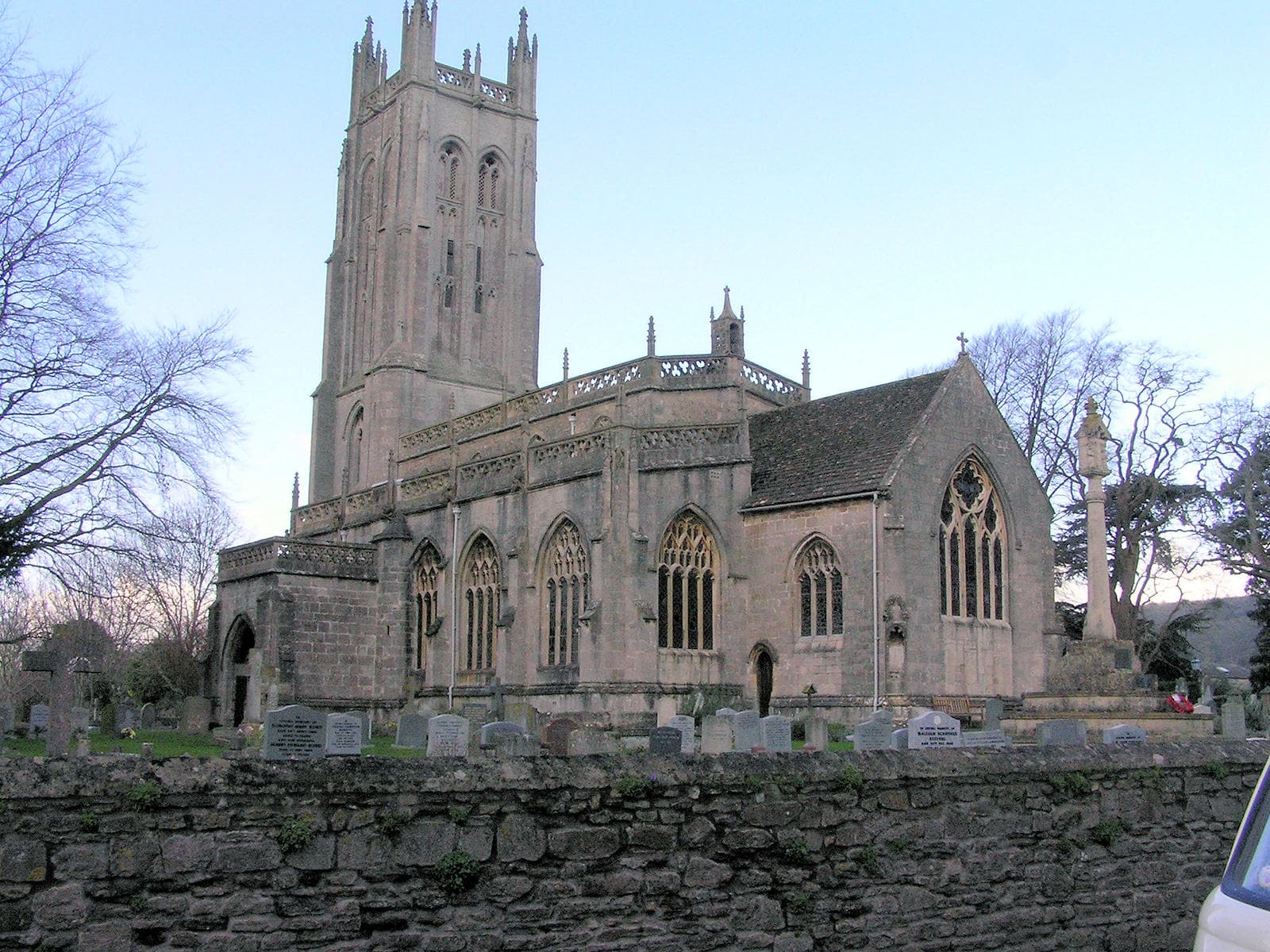
The Church of All Saints is the parish church of the large village of Wrington, in north Somerset, beneath the Mendip Hills. A medieval church of the thirteenth and fifteenth centuries, it is famous above all for its magnificent west tower — one of the finest of the celebrated "Somerset towers", the great Perpendicular church towers for which the county is renowned. A Grade I listed building, All Saints is also remembered as the church where the philosopher John Locke, one of the most influential thinkers in the history of Western thought, was baptised. With its soaring tower and its long history, it is one of the most distinguished village churches in Somerset.
There has been a church at Wrington since at least the thirteenth century, though no records survive of any earlier building, even from Glastonbury Abbey, which held much of the land in the area. Some thirteenth-century work survives in the present church, mostly in the chancel, which is notably plainer in appearance than the nave — a clue to its earlier date. The church was transformed in the great age of Somerset church-building: between about 1420 and 1450 it was extensively remodelled and expanded, the nave and aisles rebuilt and the great west tower constructed, while the chancel was widened to fit the new, larger nave. The line of the old, lower roof can still be seen where the nave meets the tower arch.
The crowning glory of this fifteenth-century rebuilding is the west tower. The Perpendicular towers of Somerset — at Wells, Taunton, Huish Episcopi, Evercreech and many other places — are among the most beautiful in England, and Wrington's is reckoned one of the very finest, a tall and richly detailed composition of pinnacles, buttresses and traceried windows that rises proudly over the village and the surrounding countryside. The tower is a masterpiece of late medieval craftsmanship and the pride of the parish.
The church's most famous association is with John Locke, the great philosopher of the Enlightenment, whose ideas on liberty, government and human understanding profoundly influenced the modern world, including the founders of the United States. Locke was born at Wrington in 1632 and baptised in the font of All Saints, giving the church a place in the history of ideas. The area also has connections with the writer and reformer Hannah More, who lived nearby and did much for the education and welfare of the people of the Mendip villages.
The church was thoroughly restored between 1859 and 1860, in the manner of the Victorian age — the walls plastered, the medieval pews replaced, a new east window installed as a copy of the earlier thirteenth-century work, and other changes made — and the tower was restored in 1948. Despite these alterations, the church retains its medieval grandeur, above all in its great tower.
Today All Saints continues as an active Anglican parish church in the Diocese of Bath and Wells, serving the village of Wrington. Its splendid tower, its long history and its associations with John Locke make it a church of real interest and beauty, a building that gathers up the history of this corner of Somerset.
The church stands at the heart of the large village of Wrington, in north Somerset, in the valley of the Congresbury Yeo beneath the northern slopes of the Mendip Hills. The villages of the Yeo valley, the dramatic Mendip landscape with the gorge and caves of Cheddar, the cathedral city of Wells, the city of Bristol and its airport nearby, and the wider Somerset countryside are all within easy reach.
From the thirteenth-century chancel and the great rebuilding of the nave and tower between 1420 and 1450, through the baptism of John Locke in 1632 and the Victorian restoration, the Church of All Saints gathers many centuries of Somerset history into one building. A Grade I listed church crowned by one of the finest of the Somerset towers, it remains the living parish church of Wrington — a magnificent medieval church beneath the Mendip Hills.
Plan a visit
Visiting hours & services.
Visitor information
The Church of All Saints is an active Anglican parish church in the village of Wrington, north Somerset, in the Diocese of Bath and Wells. A Grade I listed medieval church famous for its magnificent Perpendicular tower — one of the finest of the Somerset towers — and as the place where the philosopher John Locke was baptised, it is well worth a visit. Opening times may vary, so it is advisable to check locally before travelling.
Where to find it
Location & contact.
In the neighbourhood
Nearby attractions.
Gallery
Sources
Where this record comes from.
This entry is reconciled from open data. Follow the sources to verify the details or suggest a correction.
Nearby