Laceby, United Kingdom№ 000066318
Church of Saint Margaret, Laceby
- Founded
- 1000
- Tradition
- Anglican / Episcopal
- Style
- Anglo-Saxon & Medieval Gothic
About this place
History & significance.
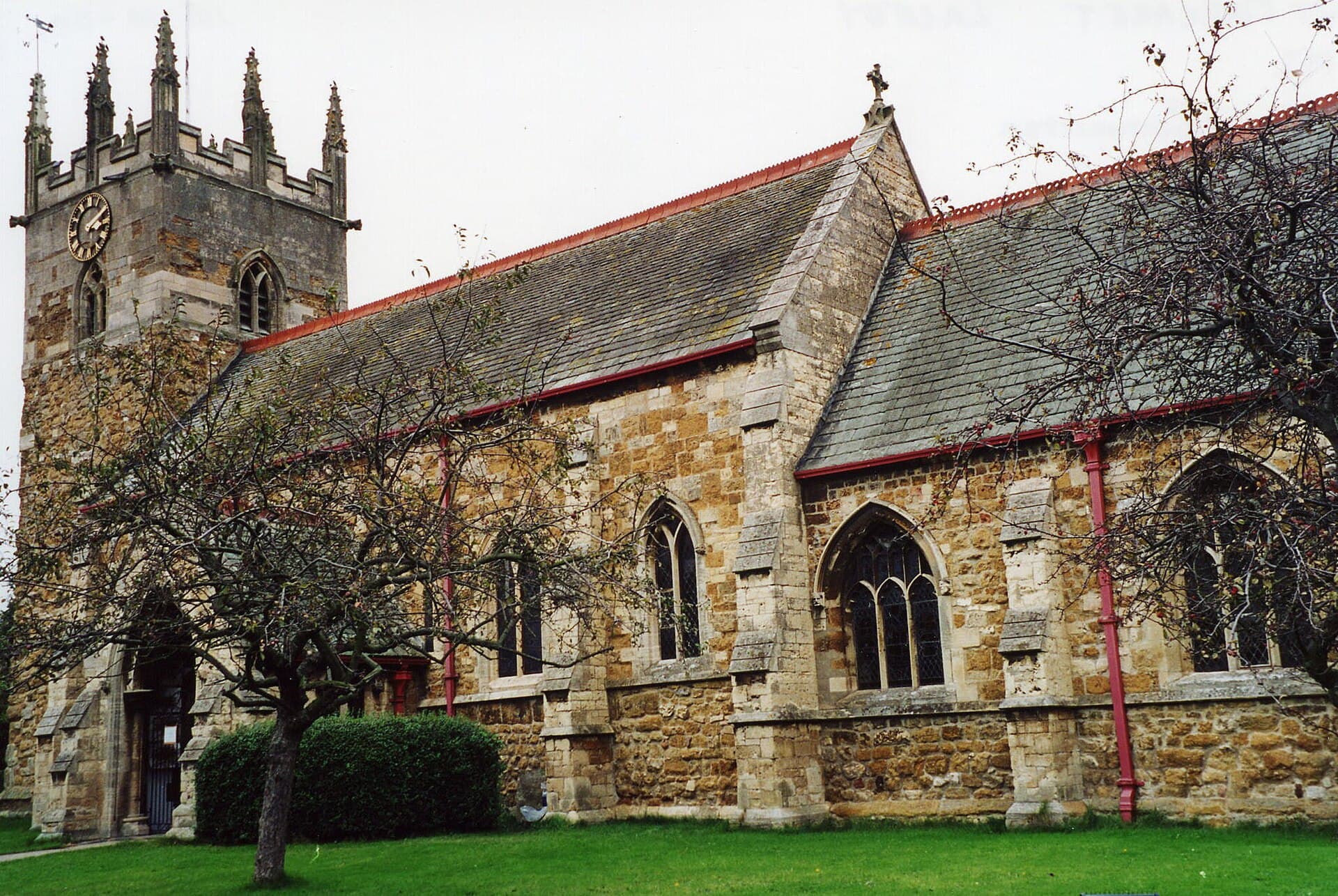
The Church of St Margaret is the parish church of Laceby, a village on the edge of the Lincolnshire Wolds near Grimsby. A Grade I listed building dedicated to St Margaret of Antioch, it is a church of considerable antiquity, with fabric reaching back to the late Anglo-Saxon period, and it gathers within its walls a thousand years of the history of this corner of Lincolnshire. Built of warm local ironstone, with a battlemented tower whose lower stage is Saxon, it remains the historic heart of the village.
The oldest parts of the church date from the tenth and eleventh centuries, the last age of Anglo-Saxon England. The lower part of the tower, and parts of the nave, belong to this early period, making St Margaret's one of the older churches in the area; the upper stage of the tower, faced in dressed limestone, was added in the fourteenth or fifteenth century. The church grew over the medieval centuries: the arcade dividing the nave from the aisle is of the thirteenth century, and the chancel is also thirteenth-century, retaining the remains of blind arcading of that date, with windows inserted in the fourteenth and fifteenth centuries. The building preserves a number of Norman features, including the arch of the main doorway inside the porch, a fine crenellated arch opposite the main door separating the nave from the north aisle, and a Norman window opening — testimony to the church's long and continuous history.
Like so many ancient churches, St Margaret's was extensively restored in the Victorian period. In 1869 the architect James Fowler of Louth — one of the most prolific church architects of Victorian Lincolnshire — carried out a major rebuilding and restoration: the clerestory at the top of the nave walls was removed and the roof-line altered, the north aisle, chancel and much of the nave were reconstructed, and a new porch and vestry were added. During this work, grave covers dating from the tenth or early eleventh century were discovered and incorporated into the interior of the church, precious relics of its Saxon past, and a small, blocked-up Norman window was found on the east side of the porch, which was restored and filled with stained glass depicting St Margaret of Antioch, with a matching window of St John the Baptist created opposite. The restored church was re-opened with special services led by Christopher Wordsworth, the Bishop of Lincoln, on 18 May 1870, and an organ-chamber was added in 1912.
The church is rich in historic detail. On the outside of the west pillar of the main doorway is a medieval Mass dial, or scratch sundial, once used to mark the times of services; in the chancel is a monument to a W. Laud who died in 1424, and at the east end of the nave is a floor slab to Ralph Ballel of 1730, with a panel bearing his arms. The tower holds a peal of four bells, and the church, built of Ancaster and local stone in the Early English and Perpendicular styles, seats around 300 people. These accumulated features — Saxon stones, Norman arches, medieval monuments and Victorian glass — make St Margaret's a church of real interest, layered with the work of many centuries.
Today St Margaret's continues as an active Anglican parish church in the Diocese of Lincoln, serving the village of Laceby as it has done for a thousand years. Its Saxon tower and its long history give it a special place among the churches of north Lincolnshire.
The church stands in the village of Laceby, on the western edge of Grimsby, between the great fishing port and the rolling chalk hills of the Lincolnshire Wolds Area of Outstanding Natural Beauty. The Wolds, with their quiet villages and ancient churches, rise to the south and west; the Humber estuary, the fishing heritage of Grimsby and Cleethorpes, and the wider Lincolnshire countryside are all within easy reach.
From a late-Saxon church of the tenth or eleventh century, through its Norman arches and medieval chancel and tower, the Victorian restoration by James Fowler that uncovered its Saxon grave covers, and the monuments and Mass dial within and without, the Church of St Margaret gathers a thousand years of Lincolnshire history into one building. A Grade I listed church with a Saxon tower, it remains the living parish church of Laceby — an ancient and venerable survival on the edge of the Lincolnshire Wolds.
Plan a visit
Visiting hours & services.
Visitor information
St Margaret's is an active Church of England parish church in the Diocese of Lincoln, open to visitors in the village of Laceby near Grimsby. A Grade I listed building of warm local ironstone, its tower has a late-Anglo-Saxon lower stage; the church preserves Norman arches, a 13th-century chancel, Saxon grave covers uncovered in the 1869 restoration by James Fowler, a medieval Mass dial and historic monuments.
Where to find it
Location & contact.
In the neighbourhood
Nearby attractions.
Gallery
Sources
Where this record comes from.
This entry is reconciled from open data. Follow the sources to verify the details or suggest a correction.
Nearby