Lydiard Tregoze, United Kingdom№ 000066009
Church of St Mary, Lydiard Tregoze
- Founded
- 1100
- Tradition
- Anglican / Episcopal
- Style
- Gothic
About this place
History & significance.
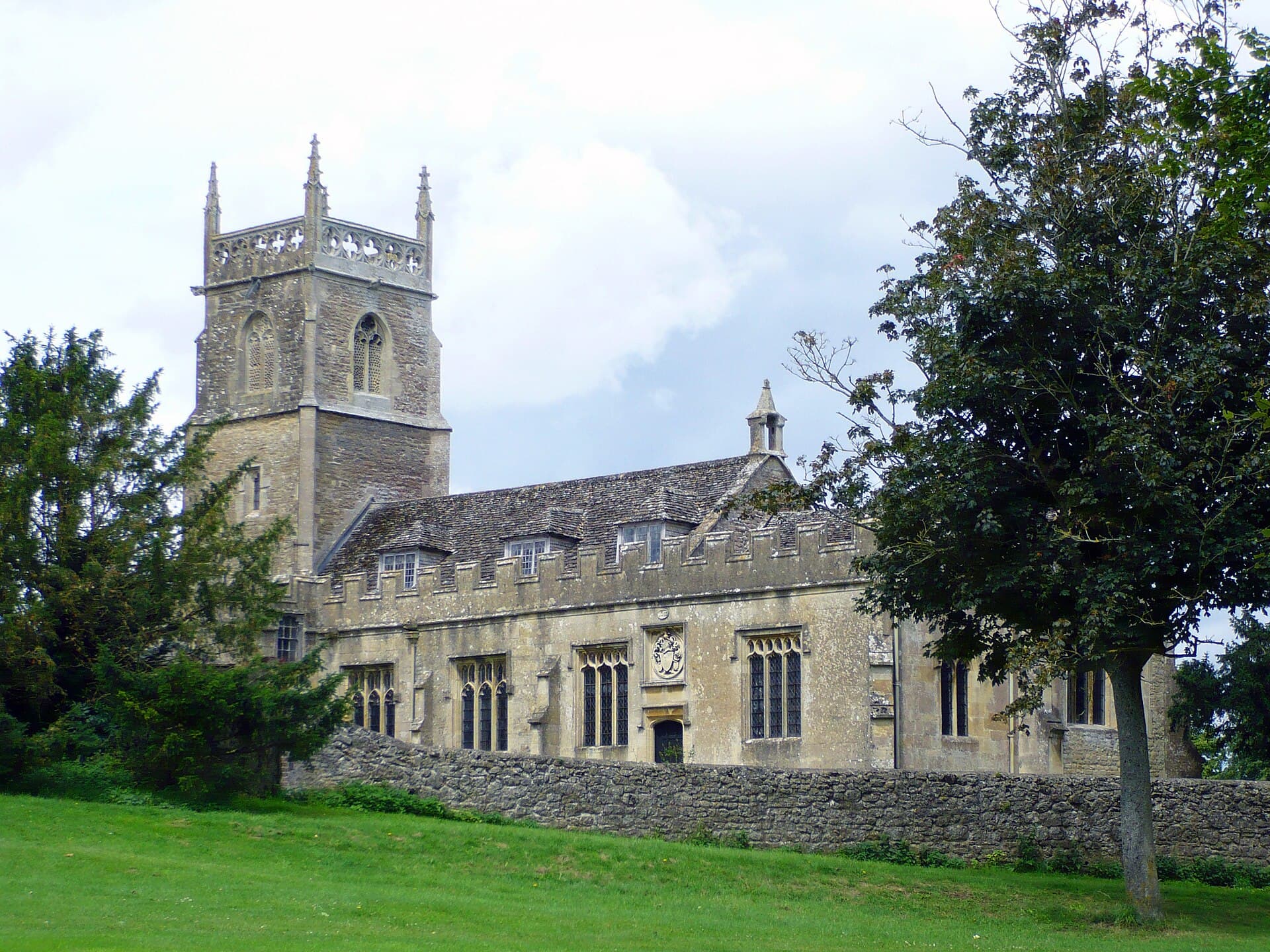
St Mary's Church at Lydiard Tregoze stands within the great Lydiard Park on the western edge of Swindon in Wiltshire, behind Lydiard House — a Grade I listed parish church so crowded with the monuments of one family, the St Johns, that it can feel less like a parish church than a dynastic chapel. Its story begins in Saxon times and runs unbroken through nine centuries of English history.
A church was founded here in the Saxon era, when the manor of Lydiard belonged to a great landed estate centred in Herefordshire. After the Norman Conquest the complex of estates, headed by Ewias Castle, passed to Alfred of Marlborough — in some documents Lydiard is even called Lydiard Ewias. Around 1100 Harold, head of the barony of Ewyas, built a church at Lydiard, and the nave of the present building most probably stands on the same site, and to the same dimensions, as that Norman predecessor. Toward the end of the twelfth century the estate passed by marriage to the Tregoz family, who took their name from the Normandy village of Troisgots; "Tregoz" was appended to "Lydiard" to distinguish the parish from neighbouring Lydiard Millicent. In the thirteenth century the Tregoz family greatly enlarged — perhaps even rebuilt — the church, adding a new north aisle. The stone font, the church's oldest surviving feature, dates from this period, possibly replacing an earlier wooden vessel, and has been used continuously for baptisms of infants, children and adults for some eight hundred years. Near it, beneath a window in the north aisle, are traces of a blocked doorway known as the Devil's Door: in the Middle Ages it was left open during baptisms so that the evil spirits thought to dwell in a child before baptism could escape.
In 1300 the manor passed by marriage again, to the Grandison family, under whom the south aisle was added and the walls enriched, as in earlier centuries, with mural paintings — vivid visual aids for congregations who could not read, repainted repeatedly over the years. Then in 1420 Margaret Beauchamp — one of the most important, wealthy and influential women of the fifteenth century, and grandmother of Henry VII through her Beaufort daughter — inherited all the Grandison properties including Lydiard Tregoze. Her marriage to Oliver St John brought Lydiard into the St John family, and the couple were probably responsible for the great fifteenth-century campaign: the remodelling of the chancel in its surviving form, the addition of a south chapel, the west tower and the south porch, with the whole building redecorated in brilliantly coloured patterns on the masonry, a new series of wall paintings and renewed stained glass.
The Reformation changed the church's face: the wall paintings were covered over and almost all the old monuments destroyed. But the most spectacular transformation came in 1633, when Sir John St John remodelled the south chapel as the family burial place, filling the church with the series of family monuments for which it became famous — works that give the impression of a private mausoleum within a parish church. On the south exterior wall facing the house he added battlements, and over the family's private entrance to the chapel, their coat of arms. The chancel arch was decorated with the Stuart royal arms, probably in 1633; galleries for musicians and a choir were installed at the west end; and the Ten Commandments were painted above the chancel arch with sacred texts on the walls. The chancel holds the celebrated triptych attributed to William Larkin, painted with the family of Sir John amid heraldry on a gesso ground, and the life-size monument of Sir John and his wife, lying beneath a canopy whose curtains are held open by attendants. The chancel ceiling is plastered and painted as a sky with stars, the communion rail of about 1700 is exquisite wrought-iron work with monograms, probably Italian, and the pulpit is seventeenth-century.
The church is large, built of limestone rubble and ashlar with angle buttresses, its three-stage west tower finished with pierced parapets and pinnacles; the community's churchyard lies beside it. Within, walls rich in murals survive from as early as the thirteenth century — the north wall bears scenes from the life of St Thomas Becket, and on a pillar facing the organ is a polychrome image of the Risen Christ, the sole survivor of one repainting campaign. Victorian works were followed in 1901 by a first attempt at restoration, when some of the wall paintings were rediscovered, though systematic conservation had to wait until the 1960s. English Heritage listed the church at Grade I on 17 January 1955.
Today St Mary's — "St Mary's in the Park" — remains an active Anglican parish church in the Diocese of Bristol, its medieval font still in use, its painted walls and astonishing St John monuments making it one of the most rewarding small churches in the West of England.
Plan a visit
Visiting hours & services.
Visitor information
St Mary's ('St Mary's in the Park') is an active Church of England parish church in Lydiard Park, behind Lydiard House on the western edge of Swindon (Diocese of Bristol). The Grade I church is celebrated for its St John family monuments — including the William Larkin triptych and the canopied life-size tomb of Sir John St John — its medieval wall paintings of St Thomas Becket, the starry painted chancel ceiling, and a font in continuous use for 800 years. Open for services and on heritage open days.
Where to find it
Location & contact.
In the neighbourhood
Nearby attractions.
Gallery
Sources
Where this record comes from.
This entry is reconciled from open data. Follow the sources to verify the details or suggest a correction.
Nearby