Thornton Steward, United Kingdom№ 000066558
Church of St Oswald
- Founded
- 1086
- Tradition
- Anglican / Episcopal
- Style
- Norman
About this place
History & significance.
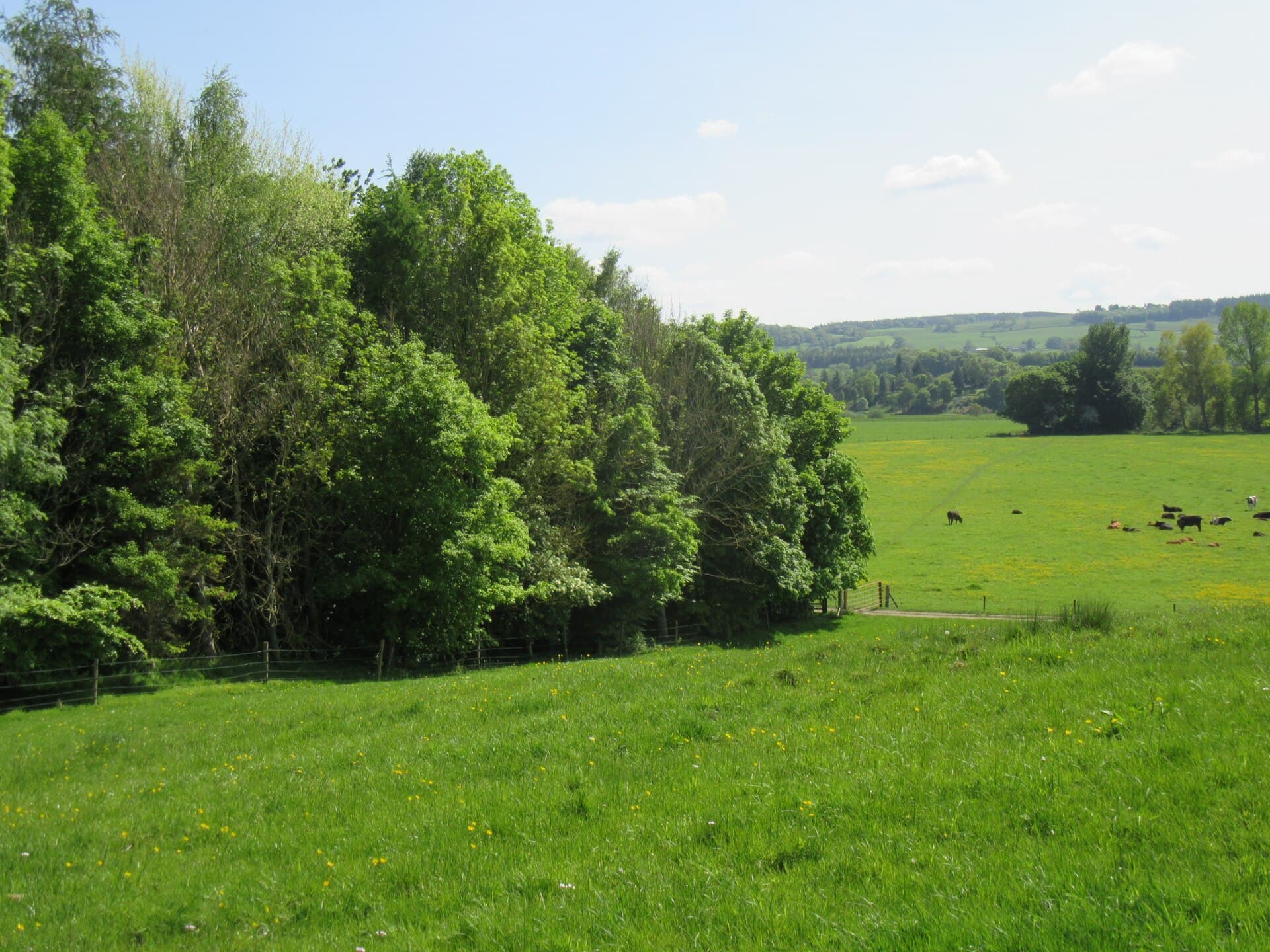
The Church of St Oswald at Thornton Steward is thought to be one of the oldest churches in Wensleydale — a building mentioned in the Domesday Book, with Saxon and Norman fabric in its walls, standing in a burial ground that has received the dead since the seventh century. The Grade II* listed church sits alone in the fields a little over a quarter of a mile west of its North Yorkshire village, on ground slightly lower than the houses, with nothing around it but an unspoilt view across Wensleydale to Jervaulx Abbey on the far side of the River Ure.
The village's name records its medieval lords: Thornton Steward belonged to the stewards of the Earl of Richmond, and the first of them, Alan — a nephew of William the Conqueror — is thought to have built the present church. The Domesday entry for Thornton Steward already mentions a church here, and in 1146 the building and certain surrounding lands were given to the Priory of St Martin near Richmond. The walls are Norman in origin, while the nave and chancel preserve Saxon work; the north vestry and the porch at the west end came later. Blocked Norman windows survive in the nave, and the south doorway, with its zigzag-moulded arch, is a notable piece of Norman construction. The church has never had a tower; instead a bell-cot with three open arches rides the roof at the west end.
The chancel was extended in the thirteenth century, but its later history shows how even sensible-seeming alterations can go wrong. In 1685 the hipped chancel roof was lowered and flattened, and by the early eighteenth century the churchwardens were complaining bitterly of the consequences: the flat roof let rainwater into the church during heavy weather, and the parish's great Bible had to be disposed of because it kept getting wet. Among the fittings, the font is thought to be Early English, an octagonal bowl with concave sides sloping to the base, crowned by a Jacobean cover with a ball finial, and a recess in the north wall is believed to have been the Easter Sepulchre.
The church's lonely position has invited speculation. One tradition holds that the village once surrounded the church and shifted eastwards away from it during an outbreak of plague — a fate also ascribed to nearby Finghall and its Church of St Andrew. But the antiquarian Harry Speight pointed out that many ancient churches in this region were simply built away from their villages, and Hartley and Pontefract, in The Charm of Yorkshire Churches, agreed that such remoteness is common in the district. The Victorian church visitor Sir Stephen Glynne was unmoved by the building itself — "no attractive appearance", he wrote — but conceded it had "a fine view."
The most haunting evidence of the site's antiquity emerged only in 1996, when work on a new Yorkshire Water pipeline revealed up to thirty bodies dating from between the seventh and tenth centuries. All but one had been buried facing the sunrise — the ancient belief being that on the Day of Judgement the dead would rise to face the judgement coming from the east; the single exception is thought to have been a priest, buried facing his flock.
The fabric has been periodically renewed. Thomas Dunham Whitaker, in his 1823 History of Richmondshire, found "the external appearance of the church... modernized, and the whole in an extremely neat and credible state." A thorough renovation followed between April and September 1908, costing £750: soil was removed from the floor and replaced with concrete, new roofs were installed, and the external walls were re-rendered with the pebble-dashing stripped away. The church was listed Grade II* in 1967.
St Oswald's belongs today to the parish of Middleham with Coverdale, East Witton and Thornton Steward. Its administrative history is venerable: the Archdeaconry of Richmond, created around 1088 with Thornton Steward within its bounds alongside Easingwold, Clapham and Bolton-on-Swale, was for nearly two hundred years the wealthiest archdeaconry in England, and from the sixteenth to the nineteenth centuries the church lay in the Deanery of Catterick within the Diocese of Chester. The advowson belonged in the sixteenth and seventeenth centuries to the Scrope family of nearby Danby Hall — though, despite their seat being in the parish, the Scropes chose to be buried at Spennithorne. Dedicated to St Oswald, the seventh-century warrior-king of Northumbria, the little church in its ancient field remains a place where thirteen centuries of Wensleydale's Christian history lie quite literally underfoot.
Plan a visit
Visiting hours & services.
Visitor information
St Oswald's is an Anglican church in the parish of Middleham with Coverdale, East Witton & Thornton Steward (Diocese of Leeds), standing alone in fields a quarter-mile west of Thornton Steward village in Wensleydale, North Yorkshire. The Grade II* church, one of the oldest in the dale, repays a visit for its Norman zigzag south doorway, Saxon-origin nave, three-arched bell-cot, Early English font with Jacobean cover, and its fine view across the dale to Jervaulx.
Where to find it
Location & contact.
In the neighbourhood
Nearby attractions.
Gallery
Sources
Where this record comes from.
This entry is reconciled from open data. Follow the sources to verify the details or suggest a correction.
Nearby