Draycott, United Kingdom№ 000074840
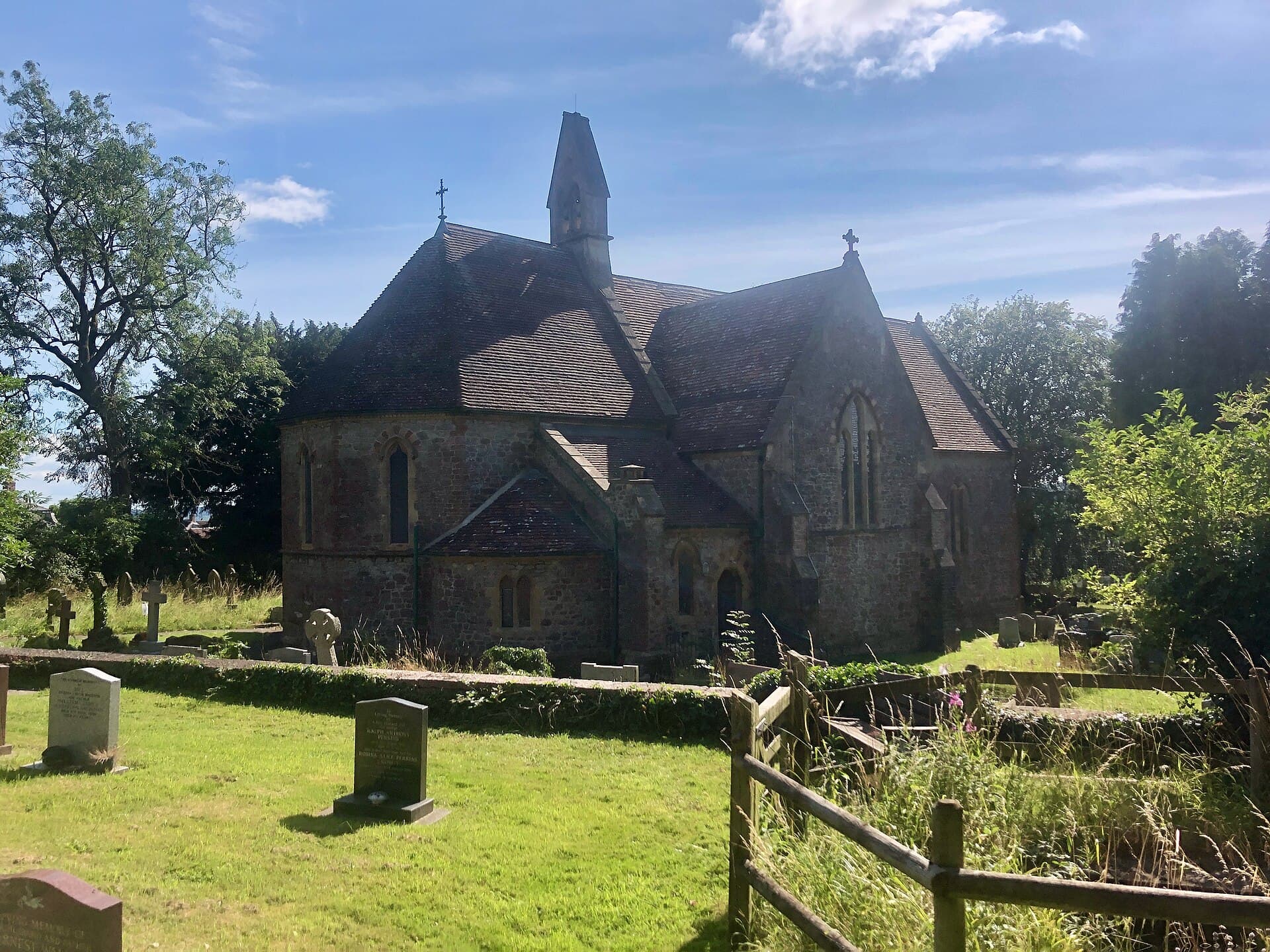
Church of St Peter
- Founded
- 1861
- Tradition
- Anglican / Episcopal
- Architect
- Charles Edmund Giles
- Style
- Gothic Revival
About this place
History & significance.
St Peter's Church at Draycott, a village under the Mendip Hills in Somerset between Cheddar and Wells, is a modest Victorian parish church with one immodest treasure: a font by William Burges, the most flamboyant art-architect of the High Victorian age — an object so prized that when the church tried to sell it in 2006, the case went all the way to one of the Church of England's highest courts.
The church itself was designed by Charles Edmund Giles and consecrated in 1861, built of local rubble stone known as "Draycott Marble" — a dolomitic conglomerate quarried nearby and once polished for chimneypieces across the West Country. The style is simple Early English Revival; Historic England's listing record calls the building "competent", and Pevsner thought it "modest". The interior's most distinctive architectural feature is a rood screen of wrought iron, later than the church itself, whose designer Historic England suggests may have been George Fellowes Prynne. The church is Grade II listed and remains an active parish church in the benefice of Cheddar, Draycott and Rodney Stoke.
But it is the font that brings pilgrims of Victorian art to Draycott. In his study Anti-Ugly, the architectural historian Gavin Stamp described it as "the one object that makes St Peter's interesting". How it came to the church is uncertain: recent research confirms it was made for the Rev John Augustus Yatman, a patron for whom Burges undertook several West Country commissions, and its size suggests it was not designed for St Peter's at all — possibly intended for the Church of St James at Winscombe, where Burges reconstructed the chancel in 1863–64. The attribution rests on style and on a sketch in Burges's notebooks, and the carving was likely executed by Thomas Nicholls, Burges's favourite sculptor. Romanesque in manner, its faces depict the Four Ages of Man — a design Burges liked well enough to reuse at St Mary's, Studley Royal, in Yorkshire, one of the supreme Victorian churches, and at his own extraordinary London home, the Tower House in Kensington.
The font's fame nearly cost Draycott its possession of it. In 2006 the church, facing a repair and restoration bill estimated at £170,000, was approached by a private collector offering £110,000 for the font and the funding of a replacement. The vicar, the Rev Stanley Price, argued the sale was essential, and the Chancellor of the Diocese of Bath and Wells, Timothy J. Briden, initially approved it. But the Victorian Society appealed to the Court of Arches, and in April 2009 permission was refused: the court found that "no compelling need to dispose of the font had been demonstrated", and warned that if such sales were allowed, "much of which adorns and adds interest, both historically and architecturally, to our churches would be lost to future generations" — a landmark ruling for the protection of church furnishings throughout England.
So the Burges font remains at Draycott, where it has no business being and where it now firmly belongs: the Four Ages of Man presiding over the baptisms of a Mendip village, in a competent little church made remarkable by a masterpiece that wandered in.
Plan a visit
Visiting hours & services.
Visitor information
St Peter's is an active Church of England parish church in Draycott, Somerset (Diocese of Bath and Wells), part of the benefice of Cheddar, Draycott and Rodney Stoke with regular services. The Grade II church's great draw is the William Burges font carved with the Four Ages of Man — saved for the parish by a landmark 2009 Court of Arches ruling — along with the wrought-iron rood screen attributed to Fellowes Prynne.
Where to find it
Location & contact.
In the neighbourhood
Nearby attractions.
Gallery
Sources
Where this record comes from.
This entry is reconciled from open data. Follow the sources to verify the details or suggest a correction.
Nearby