London, United Kingdom№ 000062385
St Clement Eastcheap
- Founded
- 1683
- Tradition
- Anglican / Episcopal
- Architect
- Christopher Wren
- Style
- English Baroque
About this place
History & significance.
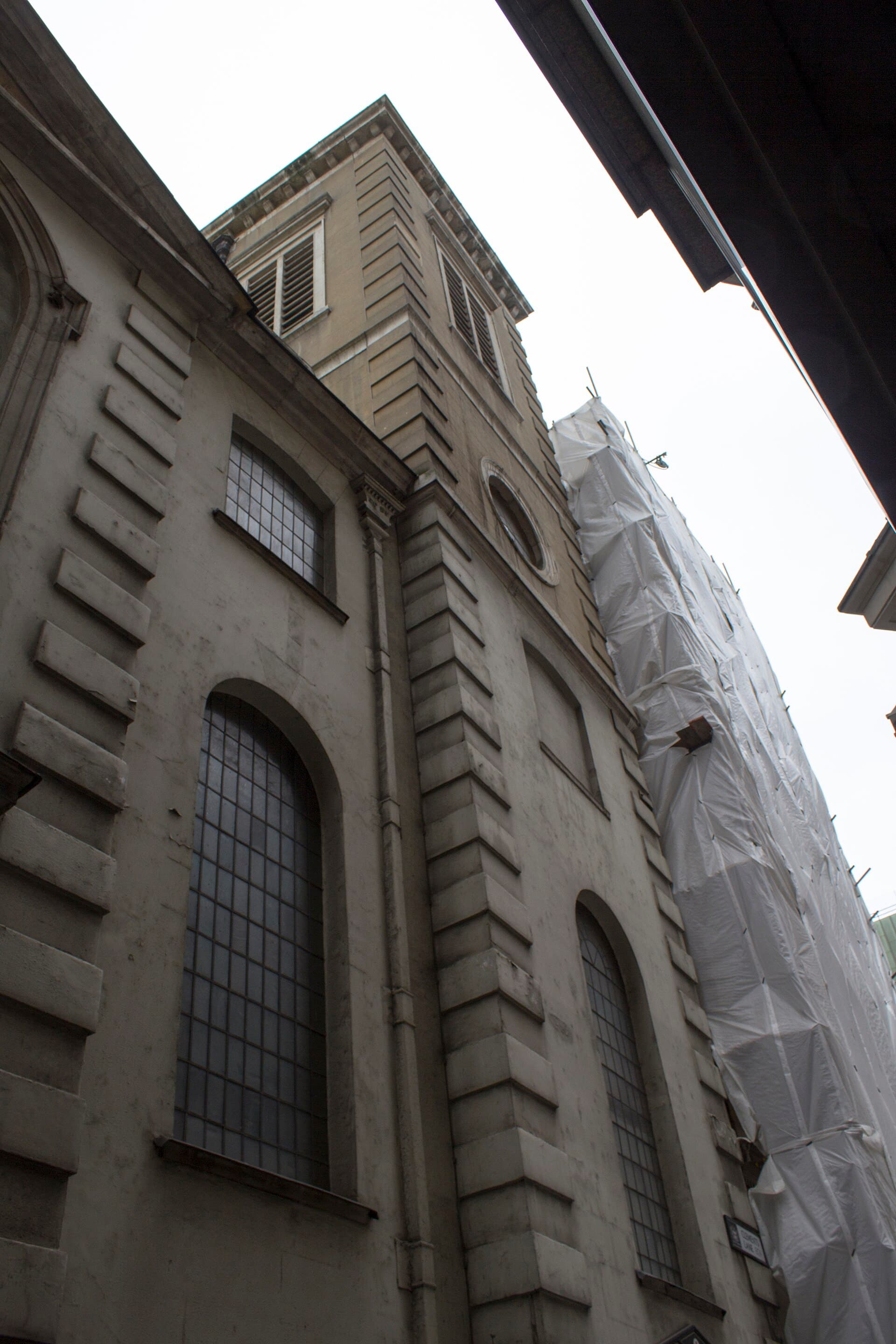
St Clement Eastcheap is a historic Church of England parish church in the Candlewick Ward of the City of London, tucked away on Clement's Lane off King William Street, close to London Bridge and the River Thames. One of the many City churches rebuilt by Sir Christopher Wren after the Great Fire of London, it is a small but beautiful church, rich in fine seventeenth-century woodwork, and is one of two ancient London churches dedicated to St Clement that lay claim to the famous nursery rhyme "Oranges and Lemons".
The church is dedicated to St Clement, a disciple of St Peter the Apostle who was ordained Bishop of Rome in the year 93 and who, according to legend, was martyred by being tied to an anchor and thrown into the Black Sea — for which reason he became a patron saint of sailors. The dedication is unusual in London: the only other ancient church so dedicated is St Clement Danes on the Strand, and both churches claim to be the "Clement's" of the rhyme "Oranges and Lemons, say the bells of St Clement's". St Clement Eastcheap's location near what were once the busy wharves of Roman and medieval London suits its dedication to the sailors' saint, and Roman remains — thick flint walls and tessellated pavements — have been found nearby in Clement's Lane, hinting at the antiquity of the site.
The street of Eastcheap was one of the main thoroughfares of medieval London — the name comes from the Saxon word "cheap", meaning a market, distinguishing it from Westcheap, now Cheapside. A church of St Clement may be referred to in a charter of William the Conqueror of 1067, and it is certainly mentioned by name in a deed of the thirteenth century. The medieval church served its parish until it was destroyed in the Great Fire of London in 1666. In 1670, during the rebuilding of the city, the parish was combined with that of the neighbouring St Martin Orgar, which was not rebuilt — though its tower survived the fire and was later used by French Huguenot refugees.
The present church was rebuilt to the designs of Sir Christopher Wren, the building work beginning in 1683 and being completed in 1687, at a total cost of £4,365. It is a modest brick building externally, but its interior is a treasure-house of seventeenth-century craftsmanship: it preserves a fine pulpit of Norwegian oak, with a hexagonal sounding board topped by a dancing cherub at each corner, and a richly carved reredos of the kind associated with the school of Grinling Gibbons. In the nineteenth century the prominent Gothic Revival architect William Butterfield substantially reordered the church to suit the High Church taste of the Victorian age, and in 1933 Sir Ninian Comper revised Butterfield's arrangement, returning the organ to its original position on the west gallery and adding a beautiful painted triptych reredos in the style of the medieval Italian master Simone Martini, depicting the Annunciation and St Clement.
Today St Clement Eastcheap continues as a church in the Diocese of London, in the heart of the City's financial district, a place of quiet beauty amid the bustle of modern London. Its Wren architecture, its fine woodwork and its associations with the sailors' saint and the famous rhyme make it one of the most charming of the surviving City churches.
The church stands on Clement's Lane in the City of London, close to King William Street, the Monument to the Great Fire, and London Bridge over the Thames. Nearby are the other great City churches, including Wren's St Magnus the Martyr and St Paul's Cathedral, the Bank of England and the heart of the financial City, Leadenhall Market, the Tower of London a little to the east, and the South Bank across the river, all within easy reach.
From its possible mention in a charter of William the Conqueror, through the medieval church destroyed in the Great Fire, the rebuilding by Sir Christopher Wren in 1683–87, and the Victorian and twentieth-century reorderings by Butterfield and Comper, St Clement Eastcheap gathers many centuries of the City of London's history into one small building. A Wren church dedicated to the patron saint of sailors and a claimant to the bells of "Oranges and Lemons", it remains a living church at the heart of the City — one of the hidden gems of London.
Plan a visit
Visiting hours & services.
Visitor information
St Clement Eastcheap is an Anglican church on Clement's Lane in the City of London, rebuilt by Sir Christopher Wren after the Great Fire. A small church rich in fine 17th-century woodwork, with a Comper triptych reredos, it is one of the City's hidden gems and a claimant to the bells of 'Oranges and Lemons'. It is open at limited times in the working week; check before visiting.
Where to find it
Location & contact.
In the neighbourhood
Nearby attractions.
Gallery
Sources
Where this record comes from.
This entry is reconciled from open data. Follow the sources to verify the details or suggest a correction.
Nearby